Cixten thermal systems
waste heat recovery
Cixten thermal systems
waste heat recovery
A breakthrough technology for industry.
Cixten converts low-temperature waste heat into useful energy :
THP : Trithermal Heat Pump
Thermal enhancement machine up to 250°C
The next generation of heat pumps
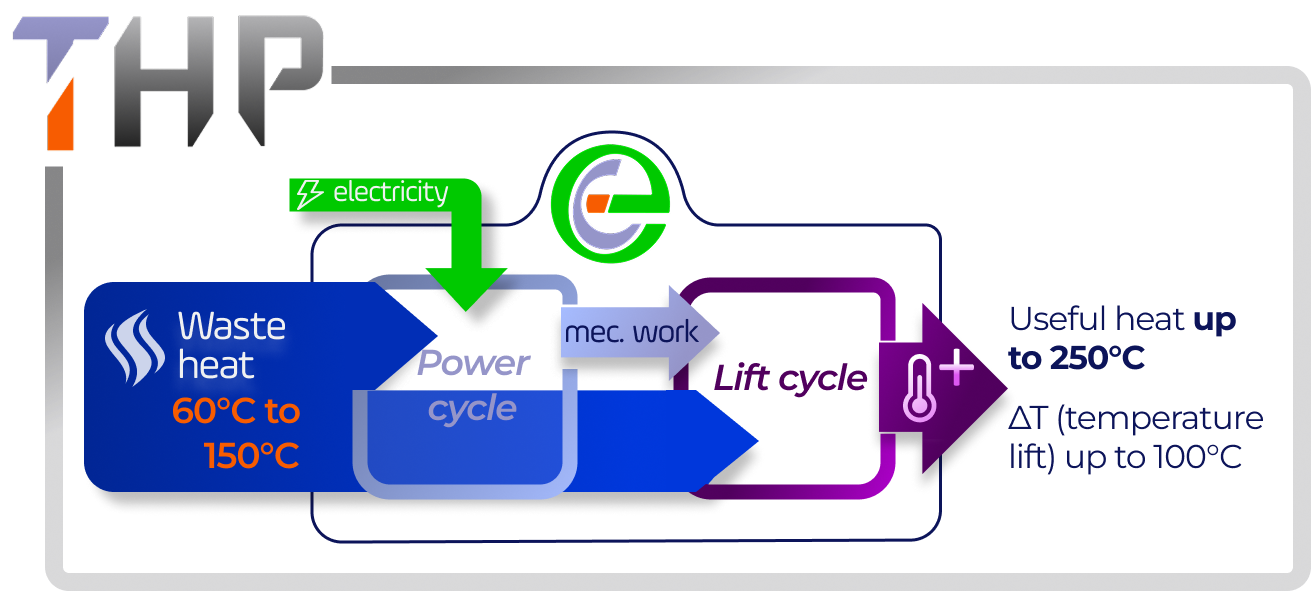
The THP is a new-generation thermal machine that upgrades the temperature of low-grade waste heat (starting at 60°C) to deliver useful heat up to 250°C, with a thermal lift of up to +100°C.
This unique performance is made possible by harnessing the exceptional properties of supercritical CO₂ through two integrated cycles :
Résult :
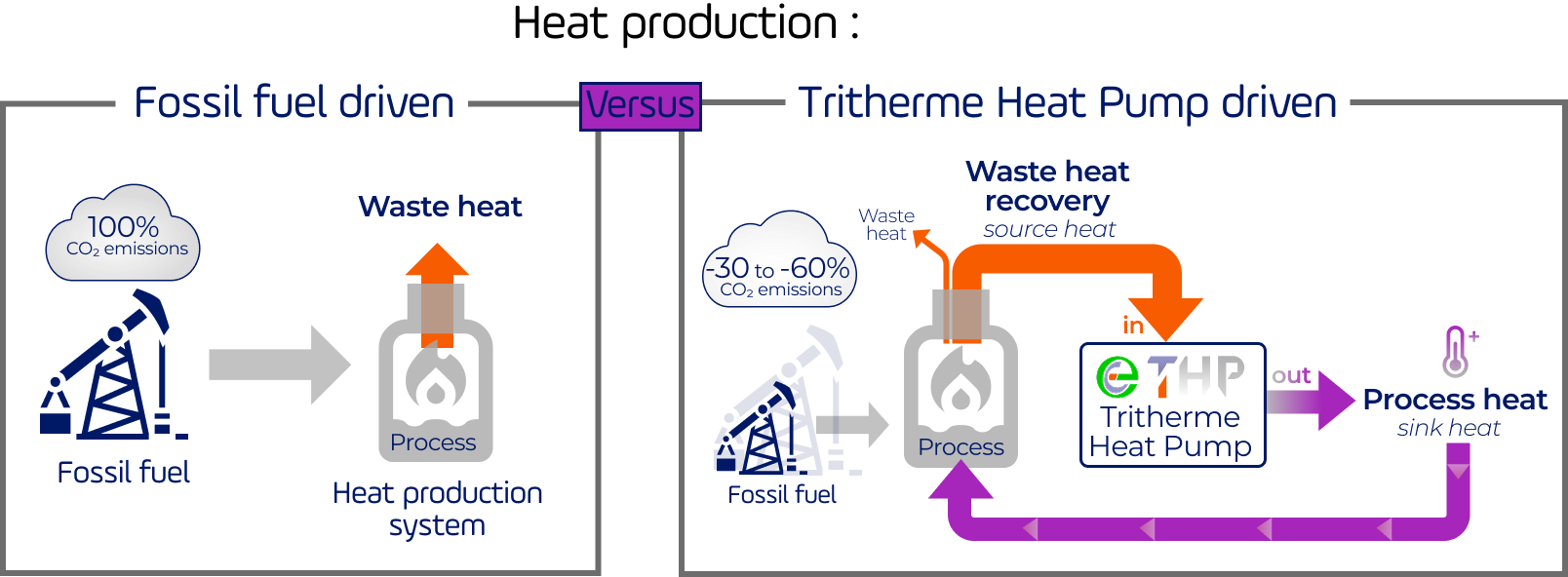
Useful heat produced without combustion, from energy that was previously lost, cheaper than gas and with no direct GHG emissions.
THP in figures
Cixten is redefining the boundaries of thermal enhancement
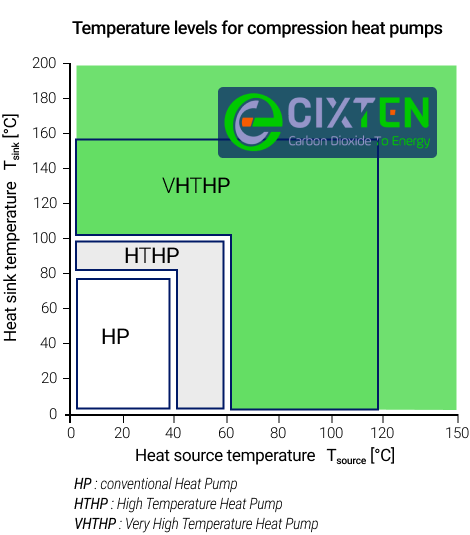
Unlike conventional industrial heat pumps, which are limited to outlet temperatures ranging from 60°C to 120°C, THP can reach up to 250°C while utilizing waste heat sources from 60°C, with a thermal ∆T of up to 100°C.
While rising temperatures and infrastructure adaptation are identified as major obstacles to the widespread deployment of heat pumps in industry, THP offers key advantages in this area by significantly reducing its own electricity consumption.
Where conventional technologies require a choice between energy performance and thermal enhancement, Cixten’s THP stands out for its unique ability to offer both simultaneously: a remarkable COP (5 to 20) and very high achievable temperatures, a combination that is unprecedented in the sector.
This Cixten technology is fully in line with the potential for deployment of industrial heat pumps. Thanks to its ability to reach very high temperatures, it can cover a large part of industrial thermal needs, which are still mainly met by fossil fuels.
Un potentiel de déploiement significatif, notamment dSignificant deployment potential, particularly in several key sectors:ans plusieurs secteurs clés :
- Paper and cardboard : up to 65% of heat production processes can be covered by industrial heat pumps.
- Agri-food : 40% of industrial heat production processes are compatible with heat pumps.
- Chemicals : approximately 25% of heat requirements can be covered, despite high thermal demands.
THP‘s key advantages

Ultra-low electricity consumption
Thanks to its power cycle powered solely by waste heat, the THP’s lift cycle offers COPs up to 15 times higher than conventional heat pumps. Only the circulation of sCO2 in the power cycle consumes electricity.

Very high thermal lift
The THP is designed to operate at high pressures, and the proprietary technology bricks developed by Cixten enable unprecedented levels of temperature lift in the industrial heat pump market.

Easy integration
Low electrical demand minimizes the need for upgrades to existing electrical infrastructure, reducing costs, delays, and constraints such as supply contract amendments or transformer modifications/installations.
Adaptability to waste heat sources
The THP offers unique modularity to adapt to a wide range of heat source temperatures and capacities, with useful heat outputs ranging from 300 kW to 1 MW.
TCC : Thermo-Compression Cycle
Thermal enhancement machine up to 250°C
The thermal compressor machine
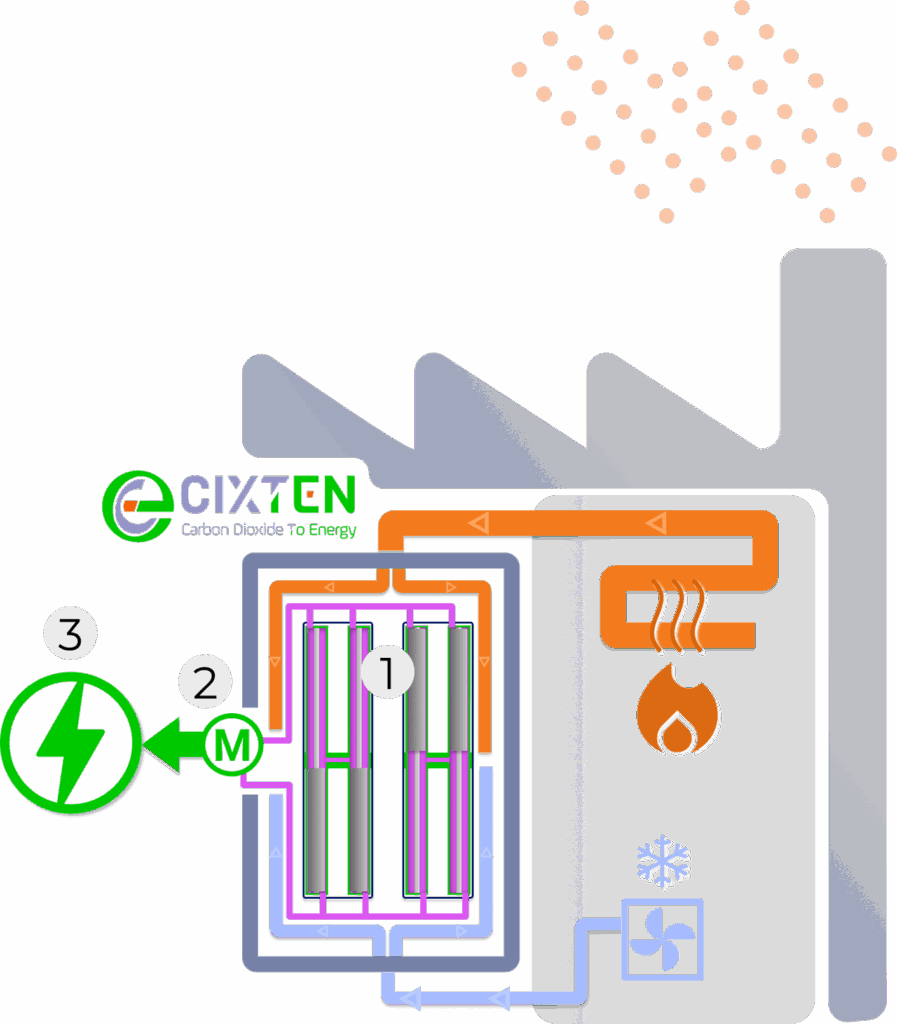
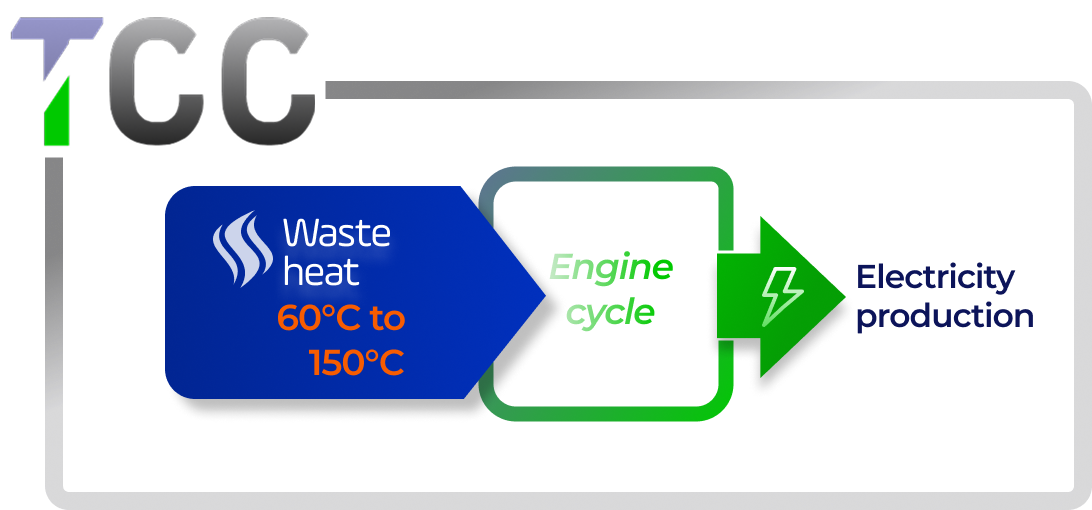
TCC is an engine cycle in which the mechanical compressor is advantageously replaced by a thermal compressor, powered solely by waste heat. The conversion of low-temperature heat into useful energy takes place in three stages :
- Alternating heating and cooling cycles of supercritical CO₂ in the thermal compressor modules
- Pressure and volume variations are converted into mechanical energy by an expansion unit
- Conversion of mechanical energy into electricity by a generator.
The supercritical CO₂ circulates in a closed loop within the thermal machine. It maintains a homogeneous state throughout the entire cycle (no phase change).
Result :
Efficient recovery of waste heat for on-site electricity generation, close to the emitting process.
TCC in figures
TCC‘s key advantages

Optimized efficiency
The cellular architecture of our machine optimizes efficient heat transfer. We developed cycle control to achieve near-theoretical efficiency.

Scalability of recovered power
Cells are standardized, allowing us to adapt their number to the size of the waste heat source. Centralized control is independent of cells number.

Adaptability to the source
Our machine adapts to fluctuations in source temperature and intermittent heat availability. It operates efficiently across a wide range of conditions while maintaining high performance.
THP : Trithermal Heat Pump
Thermal enhancement machine up to 250°C
The next generation of heat pumps
The THP is a new-generation thermal machine that upgrades the temperature of low-grade waste heat (starting at 60°C) to deliver useful heat up to 250°C, with a thermal lift of up to +100°C.
This unique performance is made possible by harnessing the exceptional properties of supercritical CO₂ through two integrated cycles :
Résult :
Useful heat produced without combustion, from energy that was previously lost, cheaper than gas and with no direct GHG emissions.
THP in figures
Cixten is redefining the boundaries of thermal enhancement
Unlike conventional industrial heat pumps, which are limited to outlet temperatures ranging from 60°C to 120°C, THP can reach up to 250°C while utilizing waste heat sources from 60°C, with a thermal ∆T of up to 100°C.
While rising temperatures and infrastructure adaptation are identified as major obstacles to the widespread deployment of heat pumps in industry, THP offers key advantages in this area by significantly reducing its own electricity consumption.
Where conventional technologies require a choice between energy performance and thermal enhancement, Cixten’s THP stands out for its unique ability to offer both simultaneously: a remarkable COP (5 to 20) and very high achievable temperatures, a combination that is unprecedented in the sector.
This Cixten technology is fully in line with the potential for deployment of industrial heat pumps. Thanks to its ability to reach very high temperatures, it can cover a large part of industrial thermal needs, which are still mainly met by fossil fuels.
Un potentiel de déploiement significatif, notamment dSignificant deployment potential, particularly in several key sectors:ans plusieurs secteurs clés :
- Paper and cardboard : up to 65% of heat production processes can be covered by industrial heat pumps.
- Agri-food : 40% of industrial heat production processes are compatible with heat pumps.
- Chemicals : approximately 25% of heat requirements can be covered, despite high thermal demands.
THP‘s key advantages :
Ultra-low electricity consumption
Thanks to its power cycle powered solely by waste heat, the THP’s lift cycle offers COPs up to 15 times higher than conventional heat pumps. Only the circulation of sCO2 in the power cycle consumes electricity.
Very high thermal lift
The THP is designed to operate at high pressures, and the proprietary technology bricks developed by Cixten enable unprecedented levels of temperature lift in the industrial heat pump market.
Easy integration
Low electrical demand minimizes the need for upgrades to existing electrical infrastructure, reducing costs, delays, and constraints such as supply contract amendments or transformer modifications/installations.
Adaptability to waste heat sources
The THP offers unique modularity to adapt to a wide range of heat source temperatures and capacities, with useful heat outputs ranging from 300 kW to 1 MW.
TCC : Thermo-Compression Cycle
Electricity generation machine
The thermal compressor machine
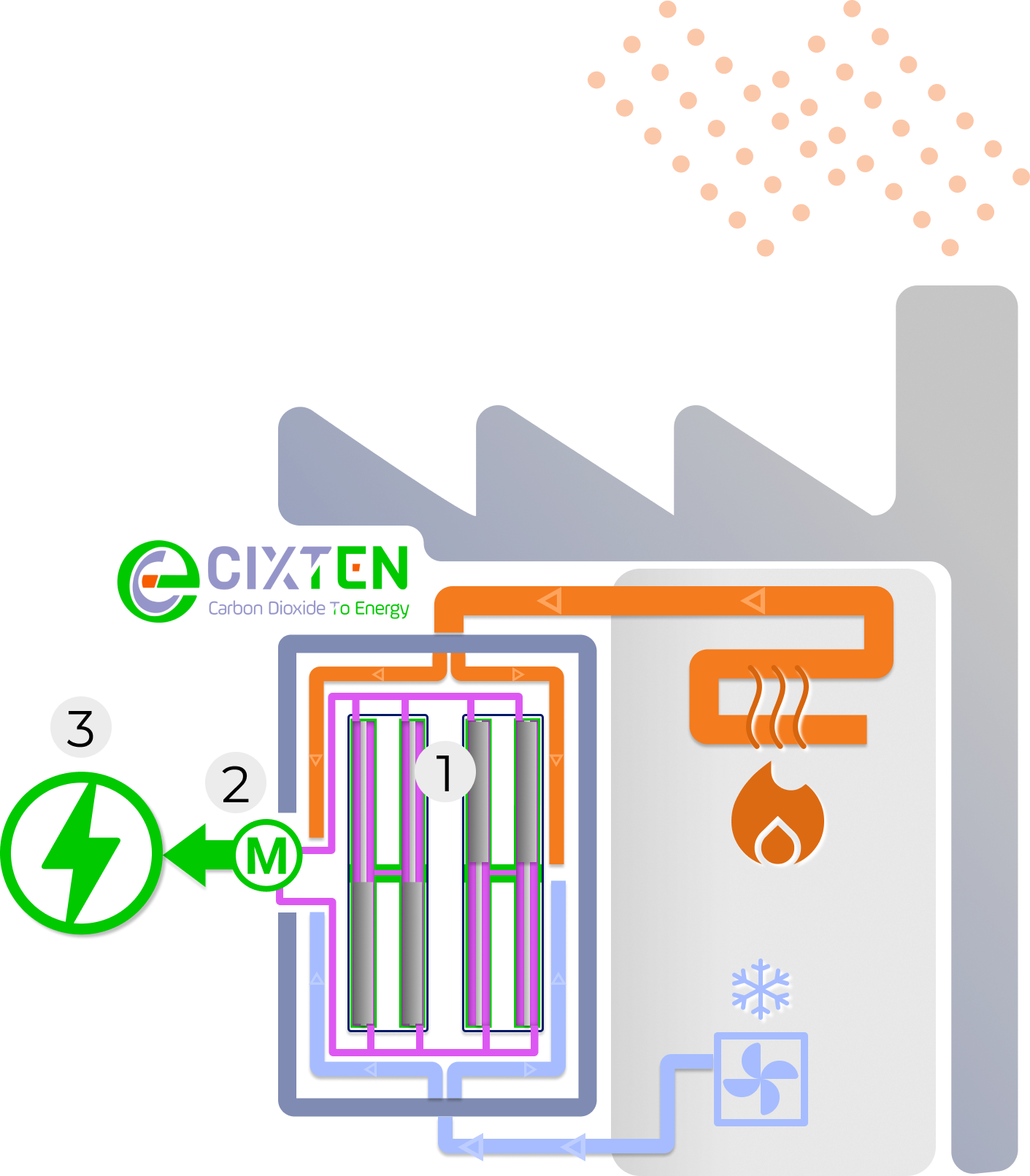
TCC is an engine cycle in which the mechanical compressor is advantageously replaced by a thermal compressor, powered solely by waste heat. The conversion of low-temperature heat into useful energy takes place in three stages :
- Alternating heating and cooling cycles of supercritical CO₂ in the thermal compressor modules
- Pressure and volume variations are converted into mechanical energy by an expansion unit
- Conversion of mechanical energy into electricity by a generator.
The supercritical CO₂ circulates in a closed loop within the thermal machine. It maintains a homogeneous state throughout the entire cycle (no phase change).
Result :
Efficient recovery of waste heat for on-site electricity generation, close to the emitting process.
TCC in figures
TCC‘s key advantages :
Optimized efficiency
The cellular architecture of our machine optimizes efficient heat transfer. We developed cycle control to achieve near-theoretical efficiency.
Scalability of recovered power
Cells are standardized, allowing us to adapt their number to the size of the waste heat source. Centralized control is independent of cells number.
Adaptability to the source
Our machine adapts to fluctuations in source temperature and intermittent heat availability. It operates efficiently across a wide range of conditions while maintaining high performance.
Working fluid
Le CO2 supercritique
Supercritical CO₂ — a standout fluid for energy performance
Cixten has chosen supercritical CO₂ (sCO₂) – R-744 – for its unique thermophysical properties, which are far superior to those of conventional fluids used in industrial thermal cycles.
sCO₂ is carbon dioxide brought to a pressure above 73 bar, entering a homogeneous fluid state with exceptional thermodynamic characteristics. It enables highly efficient heat transfer, more compact equipment, and optimal energy recovery.
A key advantage of sCO₂ is its ability to enable the use of heat exchangers with a very low “thermal pinch” – i.e., with a minimal temperature difference between the hot and cold sources. This improves the overall efficiency of the cycles, maximizes waste heat recovery, and reduces auxiliary heating or cooling requirements.
sCO₂ also offers high power density, excellent thermal stability, non-flammability, and broad temperature compatibility. These qualities make it a fluid of choice for compact, robust, and high-performance systems.
Finally, CO₂ is a natural refrigerant, with no ozone depletion potential (ODP = 0) and very low global warming potential (GWP = 1), in full compliance with current and upcoming environmental regulations.
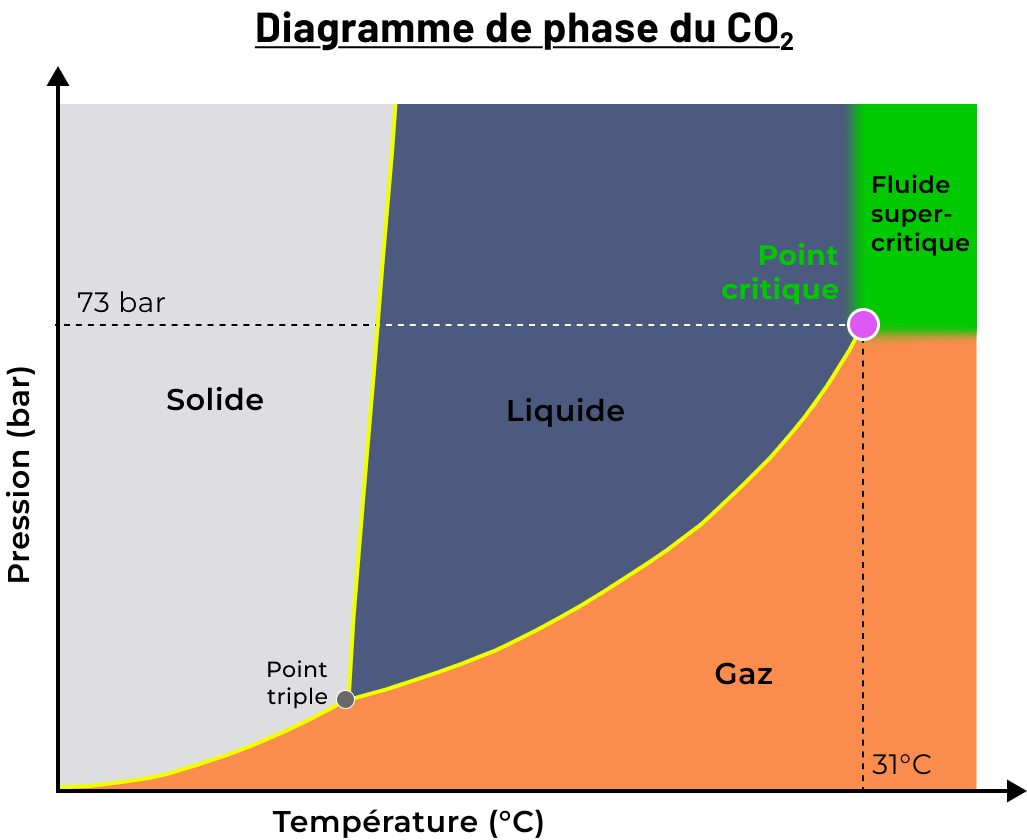
To fully unlock the potential of sCO₂, Cixten relies on advanced R&D. A doctoral research project focused on flow and heat transfer modeling in sCO₂, applied to our thermal machine architecture, helps optimize cycle design and ensure performance under real industrial conditions. In parallel, critical high-pressure components are co-developed with research laboratories and specialized industrial partners to ensure robustness, performance, and compliance with applicable standards (including the European Machinery Directive and Pressure Equipment Directive).
Exceptional properties of supercritical CO₂
High volumetric density
sCO2 has a density close to liquid (between 200 and 800 kg/m3), much higher than gas (a few kg/m3), which allows more thermal energy to be transported and converted per unit volume.
High energy density
With power density higher than other working fluids (HFCs, HFOs, steam, etc.), sCO₂ enables the design of more compact thermal machines for a given output capacity.
Excellent thermal conductivity
sCO₂ offers liquid-like thermal conductivity while maintaining low viscosity. This allows for highly efficient heat transfer in compact exchangers
Download our brochure
Find out more about our heat upgrading solution